
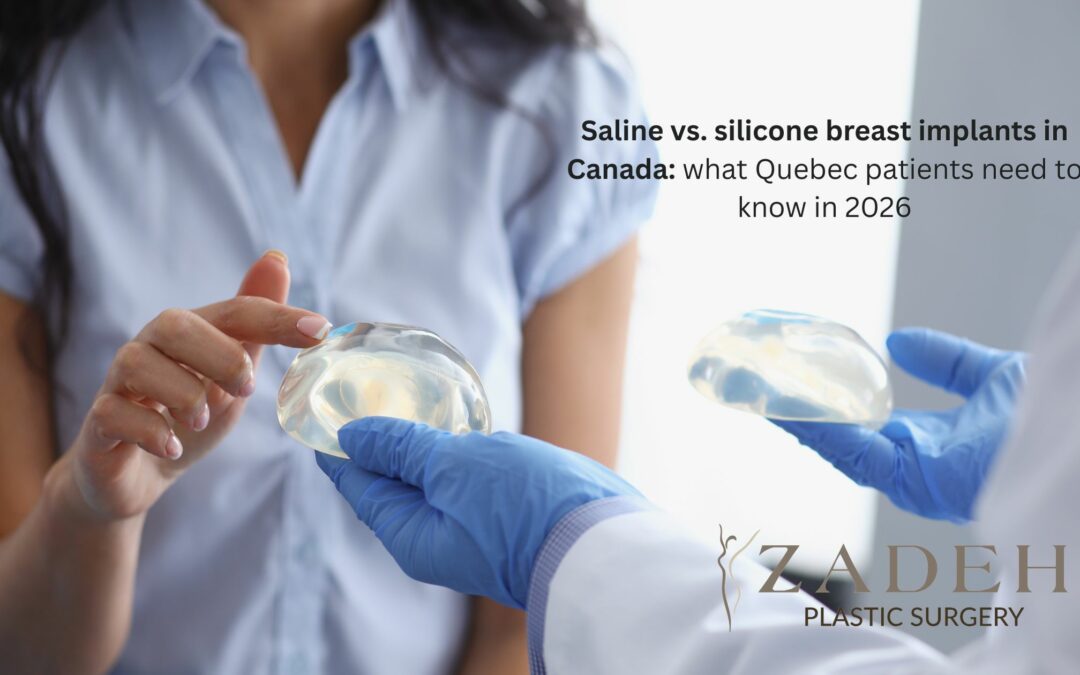
Saline vs. silicone breast implants: what patients need to know in 2026
Choosing between Saline vs Silicone Breast Implants is one of the most defining decisions in Breast Augmentation Montreal. Beyond size and projection, this choice influences tactile quality, structural integrity, long-term maintenance, and how the breast integrates with your natural anatomy.
For many patients exploring Breast Implants, the decision is not purely technical. It is deeply personal. It reflects identity, confidence, and how you wish your body to feel and evolve over time. Understanding the difference between saline and silicone implants allows for a more intentional and informed choice.
Understanding Breast Implant Options in Canada
In the context of Breast Implants, patients have access to two primary implant types approved by Health Canada:
- Saline-filled implants
- Silicone gel implants, including cohesive gel and gummy bear implants
Each implant type has unique biomechanical properties, aesthetic implications, and monitoring considerations. Both are widely used in Breast Augmentation, but they serve different patient profiles.
What Are Saline Breast Implants?
Structure
Saline Breast Implants consist of a silicone outer shell filled with sterile saline solution after insertion. This allows for smaller incisions and intraoperative volume adjustments.
Benefits
- Adjustable volume during surgery
- Immediate deflation if rupture occurs
- No need for advanced imaging to detect rupture
- Often slightly lower cost in Breast Implants
Limitations
- Less natural feel, especially in patients with thinner soft tissue
- Higher likelihood of visible rippling
- Reduced capacity for subtle anatomical refinement
What Are Silicone Breast Implants?
Cohesive Gel Technology
Silicone Breast Implants use cohesive gel, often referred to as gummy bear implants. These implants maintain their shape while offering a softer, more tissue-like consistency.
Natural Feel
One of the most common patient questions is which breast implants feel more natural. Silicone implants consistently provide a more organic tactile experience, closely mimicking native breast tissue.
Monitoring Considerations
Unlike saline implants, rupture in silicone implants may be silent. Monitoring may involve periodic imaging such as MRI to assess implant shell integrity and detect rupture.
As Dr. Teanoosh Zadeh explains,
“Modern cohesive gel implants have transformed aesthetic outcomes. They allow for volumetric restoration while preserving softness and structural harmony.”
Saline vs Silicone Breast Implants: Key Differences
When comparing Saline vs Silicone Breast Implants, several critical factors influence decision-making:
Feel and Texture
- Saline: Slightly firmer, less tissue-like
- Silicone: Soft, natural, more adaptive to movement
Appearance
- Saline: More prone to rippling
- Silicone: Smoother contour, better for thin patients
Safety and Rupture Detection
- Saline: Rupture is immediately visible
- Silicone: Requires imaging for silent rupture detection
Cost in Breast Implants
- Saline: Generally lower cost
- Silicone: Higher initial investment but often preferred
Aesthetic Outcomes
- Saline: Suitable for specific anatomical cases
- Silicone: Preferred for natural looking breast implants
Safety and Regulations in Canada
Patient safety remains central in Breast Implants. Regulatory oversight by Health Canada ensures that both saline and silicone implants meet rigorous safety standards.
Key considerations include:
- Approved implant types with strict manufacturing guidelines
- Ongoing patient awareness regarding implant lifespan
- Monitoring recommendations for silicone implants
- Emphasis on informed consent and long-term follow-up
Patients often ask about silicone vs saline implants safety in Canada. Current data supports the safety of both types when used appropriately and monitored over time.
Which Implant Type Is Right for You?
Choosing between Saline vs Silicone Breast Implants requires a personalized approach. There is no universally “best” option, only what aligns with your anatomy and aesthetic vision.
Factors to Consider
Body Type and Soft Tissue Quality
Patients with thinner tissue often benefit from silicone implants to reduce visible implant edges.
Aesthetic Goals
For those seeking subtle, natural enhancement, silicone implants often deliver superior aesthetic outcomes.
Lifestyle Considerations
Patients prioritizing peace of mind regarding rupture detection may prefer saline implants.
Long-Term Planning
Implant lifespan, future revision considerations, and aging patterns all influence implant selection.
How Dr. Zadeh Helps You Choose the Right Implant
In Breast Augmentation, the consultation process is where surgical precision meets personalized care.
Dr. Teanoosh Zadeh approaches implant selection through:
- Detailed anatomical assessment
- Evaluation of skin elasticity and breast architecture
- Consideration of implant placement such as dual plane technique
- Alignment with long-term aesthetic proportion and structural integrity
“Every breast augmentation procedure should be designed with the future in mind,” says Dr. Teanoosh Zadeh. “The goal is not just immediate enhancement, but long-term balance, softness, and stability.”
Patients are guided through a thoughtful process that prioritizes clarity, education, and confidence in their decision.
Longevity, Maintenance and Future Considerations
A common question about Breast Implants is how long implants last.
While implants are not lifetime devices, many patients enjoy long-term results:
- Silicone implants often last 10 to 15 years or longer
- Saline implants may require earlier replacement depending on structural changes
- Implant monitoring is essential for both types
Potential considerations include:
- Capsular contracture
- Implant rupture
- Changes in breast tissue over time
- Implant malposition
Long-term outcome optimization involves regular follow-up and proactive care.
FAQs About Breast Implants in Canada
Are silicone implants safe in Canada?
Yes. Silicone implants approved by Health Canada are considered safe when used appropriately and monitored according to guidelines.
Which feels more natural: saline or silicone implants?
Silicone implants provide a more natural feel due to their cohesive gel composition.
How long do breast implants last?
Most implants last 10 to 15 years, though longevity varies depending on individual factors and implant type.
What happens if a breast implant ruptures?
Saline implants deflate visibly. Silicone implant rupture may be silent and detected through imaging such as MRI.
Which breast implant is best for me?
The best implant depends on your anatomy, aesthetic goals, and lifestyle. A personalized consultation is essential.
Your Next Step Toward a Refined, Natural Result
If you are considering Breast Augmentation Montreal and evaluating Saline vs Silicone Breast Implants, the most important step is a personalized consultation.
A private assessment with Dr. Teanoosh Zadeh allows for a comprehensive discussion of your goals, anatomical considerations, and long-term vision. Through careful planning and refined surgical execution, your results can achieve both aesthetic elegance and structural integrity.
Schedule your consultation to explore your options and begin a thoughtful, individualized approach to breast augmentation.